What Is a Fuel Induction Service? (And When Your Car Actually Needs It)
If your car feels sluggish, rough, or just not the same, you’re not imagining it.
Most drivers think something major is wrong.
But a lot of the time, it comes down to carbon buildup inside the engine.
That’s where a fuel induction service comes in.
What Is a Fuel Induction Service?
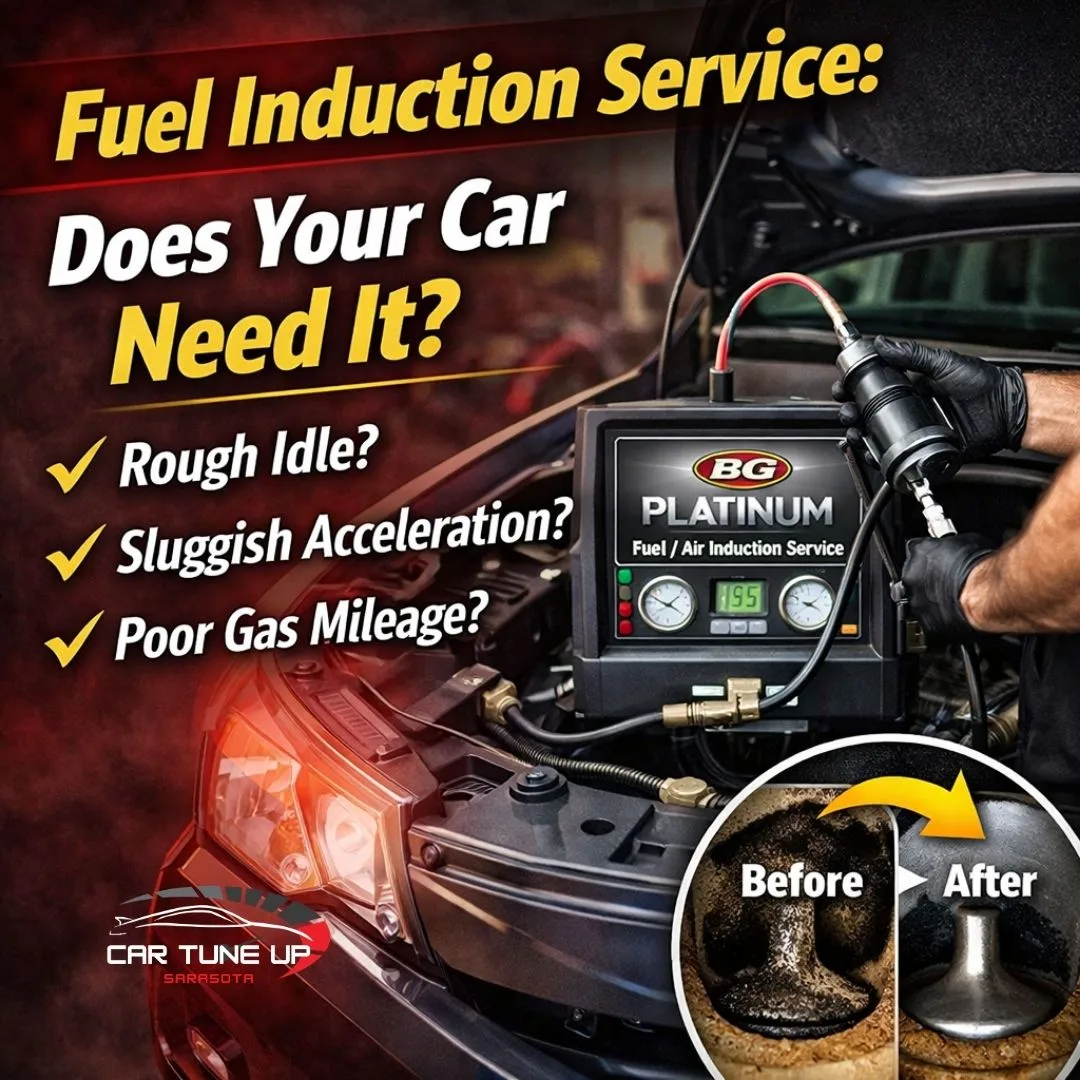
A fuel induction service is a cleaning process that removes carbon buildup from key parts of your engine, including:
- Intake valves
- Fuel injectors
- Throttle body
- Combustion chamber
Over time, these areas collect deposits that restrict airflow and fuel delivery. That’s what causes many common performance issues.
This service cleans those areas without taking the engine apart.
What Causes Carbon Buildup in an Engine?
Carbon buildup happens naturally as your engine runs.
It builds up faster if you:
- Drive short distances
- Sit in traffic often
- Drive in hot climates
- Have a modern direct-injection (GDI) engine
In places like Sarasota, heat and stop-and-go driving make this worse.
Over time, that buildup starts to affect how your engine runs.
Signs Your Car May Need a Fuel Induction Service
This is where most people notice something is off.
Common symptoms:
- Rough idle (car feels shaky at a stop)
- Sluggish acceleration
- Loss of power
- Poor gas mileage
- Hesitation when pressing the gas
- Engine feels “restricted”
Sometimes there’s no check engine light, which makes it more frustrating.
If your car just doesn’t feel right—but nothing obvious is showing—carbon buildup is a common cause.
What This Service Actually Cleans
A proper fuel induction service targets both the air side and fuel side of the engine.
It cleans:
- Intake valves (a major issue in modern engines)
- Fuel injectors (affects spray pattern)
- Throttle body (affects airflow)
- Combustion chamber (affects burn efficiency)
When these areas are cleaned, airflow improves and fuel burns more efficiently.
Does a Fuel Induction Service Really Work?
Short answer: Sometimes—when used correctly.
It can help if:
- Your car has the symptoms listed above
- There’s noticeable carbon buildup
- The engine feels restricted or inefficient
It will NOT fix:
- Mechanical problems
- Broken components
- Major engine issues
This is a maintenance and performance service, not a magic fix.
When It Makes Sense (And When It Doesn’t)
Makes sense:
- 30,000–60,000+ miles
- Rough idle or hesitation
- Loss of power or MPG
- GDI engines (very common buildup)
Probably not needed:
- Car runs perfectly
- Very low mileage
- No symptoms at all
A good shop should never push this if it’s not needed.
How Often Should You Do a Fuel Induction Service?
Typical range:
- Every 15,000–30,000 miles
- Or when symptoms show up
Some vehicles need it more often depending on driving habits.
What to Expect During the Service
The process is straightforward:
- A cleaner is added to the fuel system
- A specialized tool sprays cleaner into the intake
- The engine runs while deposits are broken down
The goal is to remove buildup safely and evenly across all cylinders.
Why This Happens Faster in Sarasota
Local driving conditions matter more than most people realize.
In Sarasota:
- High heat accelerates buildup
- Short trips don’t fully burn deposits
- Traffic keeps engines running inefficiently
That combination causes engines to dirty up faster than average.
Is a Fuel Induction Service Worth It?
If your car is:
- Running rough
- Losing power
- Getting worse gas mileage
Then yes—it can make a noticeable difference.
If your car is running perfectly, you may not need it yet.
Final Thoughts
A fuel induction service is one of those things most drivers don’t think about—until their car starts feeling off.
It’s not a cure-all.
But in the right situation, it can help restore how your engine runs.
Noticing These Symptoms?
If your car feels sluggish, rough, or not as responsive as it used to, it’s worth getting it checked.
We can take a look, show you what’s going on, and walk you through your options—no pressure, no guesswork. Book online or call 941-922-2998.